

1
After graduating, I spent more than two years working in a high-end office building in Central, Hong Kong. Though my pay was modest and the work repetitive, I was surrounded by suits, pencil skirts, and Celine bags. Each day, I had to slip into high heels, as if they were the key to mustering the confidence needed to walk into the sandalwood-scented, perfectly air-conditioned office.
Those two years were stiflingly monotonous, and I often questioned my purpose, unable to find meaning in the work I did. It wasn’t exactly painful, but it was far from fulfilling. Yet, there’s one small encounter from that time that I still can’t forget.
There was a time when two or three new security guards were stationed at the entrance of the office building. They were burly, spoke a language I didn’t recognize, and appeared to be from a Southeast Asian country. Typically, when a guard encounters a stranger, they maintain a poker face, avoiding eye contact. Yet, there was one security guard who stood out—he would wave and greet everyone warmly as soon as they approached the gate.
Most people either stared at their phones or hurried past him. I was a bit taken aback when he greeted me with such friendliness. It felt harsh to refuse, but the fear of drawing attention held me back. I timidly met his gaze, nodding uncertainly, unsure if the curve of my lips even resembled a smile.
After a few days, the security guard began to pick me out of the crowd, greeting me from afar each morning. Our exchanges grew warmer—smiles more genuine, nods more earnest—as if we shared an unspoken understanding. I started to look forward to those few brief moments as I entered the office building each day. Though we never spoke, his presence brought a small but welcome brightness to my otherwise grey and monotonous workdays.
I never spoke a word to him, not even when I quit that job and left the building for the last time. I once considered writing him a thank-you card, but the thought quickly faded, overshadowed by what always seemed like more pressing matters.
That security guard may never know that his small gesture once warmed the heart of a lost wanderer in the city. When he waved that same hand and offered that same smile to countless passersby, many of whom responded with indifference, did he ever question the significance of his kindness? In his daily repetition of mundane acts, unaware if anyone noticed, I truly saw him; and in those moments when I appeared composed but was inwardly worn down, doing work that went unseen, he saw me. In this silent recognition, there lies a power so subtle it could easily be overlooked, yet so profound it becomes unforgettable.
2
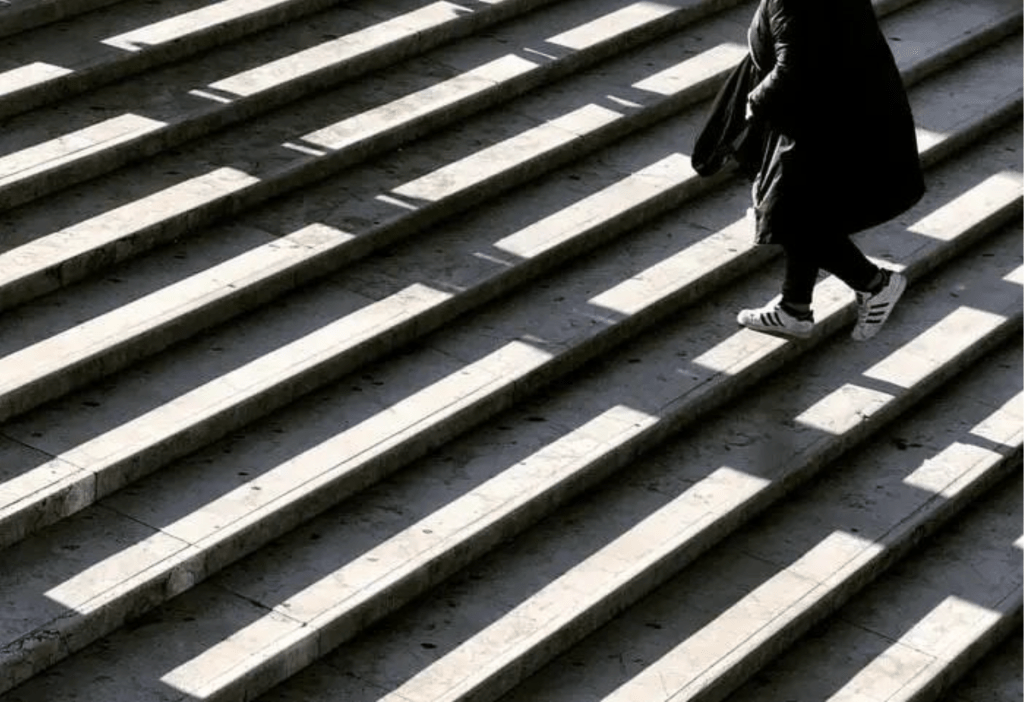
The struggle to be seen is something I’ve long wrestled with.
As a wordsmith, my work rarely carries my name. I once translated a 100,000-word doctoral thesis, and while the author graciously thanked me in the preface, my name was absent from the cover, not even in smaller print. I edit, review, proofread, and bring numerous books to life, yet when they appear in bookstores, readers focus only on the author and the content, never on the unseen hand of the editor.
I also write and manage my own blog, but it gets lost in the vast sea of self-published media outlets. I spend a month pouring my heart into writing thousands of words, only for most people to scroll past it in seconds, leaving it as just another disappointing statistic in the site’s traffic report.
In the eyes of the world, significance often lies in being seen, affirmed, admired, or revered.
Behind every celebrated K-pop star are countless trainees battling tirelessly for their dreams of stardom. People remember I.M. Pei, the visionary behind the world-famous Louvre, but seldom acknowledge those who built it brick by brick. While many chase after the brightest meteors, few notice the countless, dimmer stars that persistently shine. Only a small fraction of people achieve recognition and momentary brilliance; most who toil in obscurity either persevere quietly or fade away unnoticed.
In the digital age of ubiquitous self-exposure and instant information sharing, the power of “being seen” has become more celebrated than ever. Narratives fixate on the present, severing ties with the past and leaving no room for the future. As a result, patience has dwindled—people are no longer willing to quietly toil away for a better tomorrow. Wherever the camera sweeps, instant click-through rates reflect the deep-seated human desire to capture attention and, in turn, secure a sense of significance.
However, how many are willing to admit that NOT being seen is the everyday norm? Many, when they finally gain visibility, like to reminisce about the hardships of being overlooked. But how many can truly embrace, or even find value in, their present circumstances when they remain unseen and their future is uncertain?
3

The Japanese drama Pretty Proofreader brings attention to the often-overlooked role of proofreading, a job that is usually taken for granted when done well and criticized when mistakes occur. The show depicts proofreaders going to great lengths for accuracy, sometimes appearing excessive or absurd. However, their meticulous efforts become endearing when authors express their gratitude and readers enjoy error-free books with the fresh scent of ink.
What makes it endearing is not the visibility of their achievements in the end, but their dedication to perfecting every detail throughout the process. The deep joy they find in their work enables them to shine even in obscurity. This sense of fulfillment is independent of external recognition, yet it has a profound impact; though they may not seek attention, their contributions are both indispensable and irreplaceable.
The days spent unseen are those when one steps away from the gaze of others to reflect on one’s own purpose.
What truly impacts a person’s life is not seeking to impress others, but staying true to oneself and discovering meaning even in even the smallest actions, which can unexpectedly make a significant difference—like the security guard’s simple wave or a typo caught by a proofreader.
4

Ultimately, whether seen or unseen, we cannot escape a deep, unconscious longing—a desire for one person who, through all our highs and lows, looks upon us and says, ‘Well done!’ This acknowledgment fills us with profound and enduring satisfaction.
We often seek this validation from people or things—bosses, supervisors, parents, partners, income, titles, likes, comments, followers—but such satisfactions are fleeting and quickly fade. In the end, we find ourselves endlessly craving and suffering from unfulfilled desires.
Can there be a pair of eyes that find us in the crowds, always look at us with pleasure and approval regardless of the gains and losses in our lives?
In the days of being unseen, lost in the mundanity of the crowd, I find myself searching for a pair of eyes like that security guard’s—eyes that truly see me, that see through my efforts and struggles, and say to me: I am well-pleased with you.
Fortunately, I’ve found and embraced such an encounter. He reveals Himself when I sift through library resources to precisely translate a sentence; when I consult countless books to craft a new one with the best cover design and layout; when I sit before the computer night after night, pouring my heart into words on the screen.
I see those eyes—eyes that gaze at me tenderly and follow me after countless others have glanced past; eyes that are the Father’s constant reminder that He sees me as I eat, drink, lie down, or go out (Psalm 139:3). For He is the One who created and chose me, and He alone truly understands and defines the meaning of my labor in this life.
In His gaze, I can let go of concerns about whether I am seen or how others judge me. The path He sees me on is uniquely crafted for me. Meeting His gaze, I finally recognize my true self—whether standing in the spotlight amidst a crowd or alone in silence. I always know where to look and to whom I am ultimately accountable for what I do with my hands.
“Whatever you do, work at it with all your heart, as working for the Lord, not for human masters, since you know that you will receive an inheritance from the Lord as a reward. It is the Lord Christ you are serving.” (Colossians 3:23-24)
Not for human masters, but for the Lord. This doesn’t mean that people are unimportant or that I intentionally seek to be overlooked, but by placing God at the center of my life, He will position me where I am best suited to shine for Him. It’s not about people seeing me, but about them seeing the One who makes me shine.
Ultimately, the true significance of being unseen is to allow God to be seen.
THE END
 Angel Yang
Leave a comment